The Importance of Play-Based Learning in Early Childhood
Some of life’s biggest lessons start with play. Sure, there’s a place for structure, but it’s those messy, hands-on, make-it-up-as-you-go moments that really help children understand the world around them. Play-based learning is how children grow, explore, connect, and build confidence. And at Green Leaves Early Learning, we see the magic of play in action every single day.
In this blog, we’re diving into why play matters so much in the early years not just for giggles and games, but for building brains, friendships, and resilience. From solving problems to sparking creativity and curiosity, play is one of the most powerful ways children learn.
So, what is play-based learning?
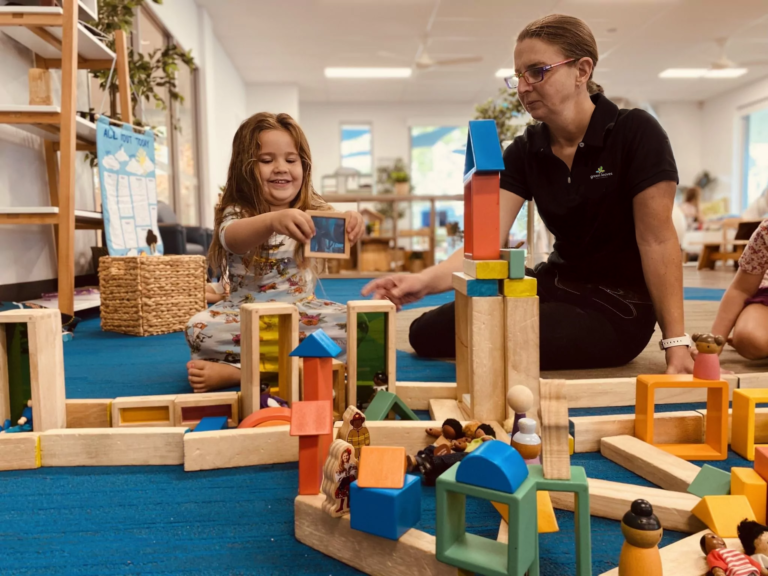
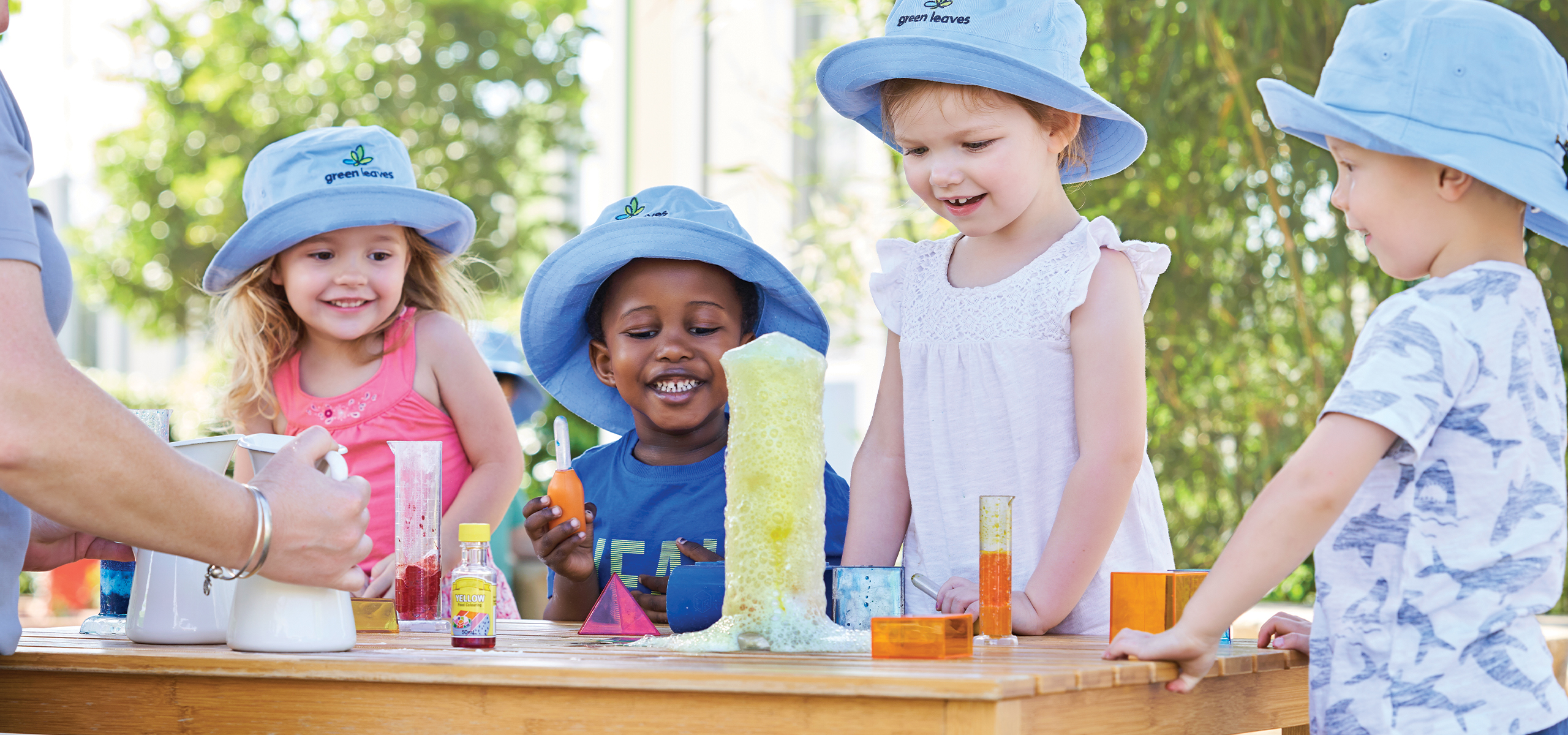
Play-based learning is all about using play as the main way children learn in the early years. It encourages children to explore, experiment, create, and problem-solve in a way that feels fun and natural. Think of it as building towers with blocks, cooking up stories in the home corner, splashing in water play, or painting with all kinds of textures; every playful moment is a chance to discover, grow, and make sense of the world.
At our Green Leaves Early Learning Centres, our learning environments are carefully designed to spark curiosity and support all kinds of play. And our Educators are there to guide, extend, and enrich these experiences, helping children connect their play to real-world learning in meaningful ways.
The benefits of learning through play
1. Cognitive development
Play stimulates the brain and helps children develop critical thinking and problem-solving skills. Through activities like puzzles, sorting games, and construction play, children learn to plan, predict outcomes, and make decisions. Play also supports early literacy and numeracy skills as children experiment with letters, numbers, shapes, and patterns in their own time and at their own pace.
2. Social and emotional growth
When children engage in group play, they learn how to take turns, share, negotiate, and resolve conflicts. These social interactions are key to developing empathy, resilience, and emotional regulation. Pretend play, in particular, allows children to express their feelings, act out real-life scenarios, and build emotional intelligence.
3. Physical development
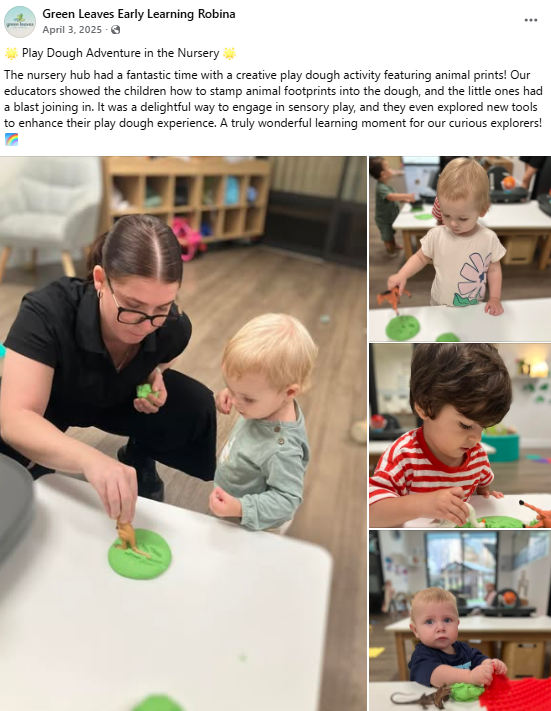
Gross motor play, such as climbing, running, and dancing, helps strengthen children’s muscles, coordination, and balance. Fine motor activities like threading beads, drawing, and manipulating small objects prepare little hands for tasks like writing. Outdoor play also promotes healthy risk-taking and supports overall well-being.
4. Creativity and imagination
Play is where creativity blooms. In a world of make-believe, a cardboard box becomes a rocket ship, a pile of cushions becomes a mountain, and a paintbrush becomes a magic wand. Creative play encourages self-expression and fosters a lifelong love of learning.
The role of Educators
Play might seem spontaneous, but there’s also a lot of thought behind it. Our Educators pay close attention to each child’s interests and stage of development, then build on that with fun, engaging experiences. They set up inviting spaces, ask questions that get the children thinking, and gently guide play to help deepen learning in a natural way.
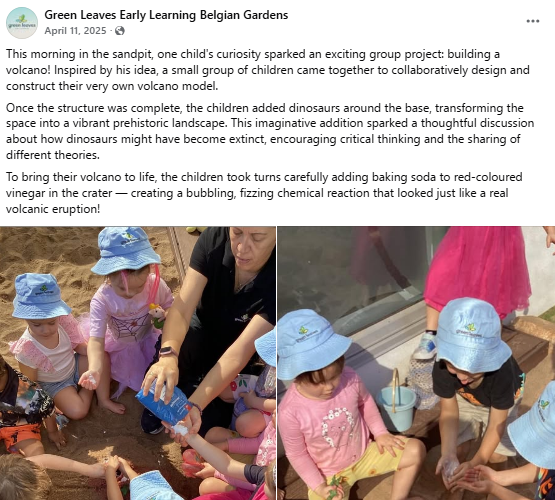
Say a child is really into dinosaurs. Our team might pop some ‘fossils’ into the sandpit, add dinosaur books to story time, or set up a mini dig site for role play. These little touches make learning feel exciting, personal, and full of meaning.
As Sienna, one of our Early Childhood Teachers at Green Leaves Newton, puts it:
‘Play is at the centre of our curriculum. Purposeful play is the richest form of learning experience for young children, especially when it’s supported by experienced educators who join in and help bring those moments to life.’
Play-based learning in action at Green Leaves
At Green Leaves, play-based learning is more than just a philosophy; it’s part of every moment in our day. With our open-door policy, you’re always welcome to visit and see the Green Leaves Difference for yourself. You might find children planting herbs in the garden, creating nature-inspired art, or collaborating to build an obstacle course. Every experience is thoughtfully planned to align with the Early Years Learning Framework, building the confidence, creativity, and curiosity children need to thrive today and well into the future.
Discover how your child can flourish. Find your nearest Green Leaves Early Learning centre today.